Published Monday, April 7, 2025
What if everything you’ve built — your spaces, your menus, your teams — aren’t underperforming… they’re just trapped behind a system that no longer fits the way your guests behave?
Imagine this.
It’s a picture-perfect Saturday afternoon. Your hotel is at 92% occupancy. The pool is full. The weather is flawless. There are families lounging in daybeds. Couples sipping drinks under umbrellas. Guests flipping through a magazine about things to do or places to go in your area. Laughter. Music. The vibe is everything you want it to be.
But here’s what you don’t see:
A woman in poolside chair 17 is scrolling Instagram and sees a nearby happy hour food special from the pub across the street with delivery through DoorDash.
A couple on the other side of the deck is trying to flag someone down to order some snacks and a drink, but give up and order Uber Eats.
Meanwhile, your fully staffed pool bar has product, people and capability — just waiting. And yet, you’re losing the sale. Every. Single. TIME!
It’s not because your food isn’t good or because your team isn’t trained.You’re losing because the way guests expect to order has changed — and your system hasn’t.
This isn’t a staffing problem. This isn’t a branding problem. This is a friction problem — and it’s costing you revenue, reputation and relevance.
Let’s Start With the Real Problem: Your Hotel Technology Systems Haven’t Evolved With the Times!
People are bypassing everything you’ve built — your restaurant, your bar, your grab-and-go concept, your resort style pool or spa, your rooftop lounge — because somewhere along the way… your systems made it too damn hard to buy from you.
It wasn’t intentional. It never is. But it happened just the same.
And it all comes down to this: your POS system hasn’t evolved — but how your guests order things has changed… DRASTICALLY!
Think about how your guests order in literally every other aspect of their lives:
- Starbucks app. Customized drink. Pay ahead. Walk in. Done.
- DoorDash. Real-time menus. Upsells baked in. Saved cards. One-click reorder.
- Amazon. AI-driven suggestions. Lightning-fast checkout. Personalized promos.
Ordering in 2025 is effortless. Predictive. Instant. Mobile-first.
But most hotels? They’re still stuck in a static, transactional mindset. Your POS is built for the floor — not for the guest journey. It was never designed for mobile ordering, real-time upsells, flexible payments or seat-level geolocation.
And that’s the disconnect.
Your guests are ready to spend — but the system you’re using wasn’t built for how they behave now.
Mobile Ordering Isn’t a Perk. It’s the Foundation.
Let’s get this out of the way first: Mobile ordering isn’t a tech trend. It’s not “nice to have.” It’s not an upgrade. It is now the expected standard for how people interact with making purchases in 2025.
If your guests can’t place an order from wherever they are — without asking for help, navigating a clunky interface or entering a dozen unnecessary details — you’ve already lost.
Mobile ordering should feel like magic.
Tap. Browse. Customize. Pay. Done.
No guessing. No waiting. No extra thinking. It’s not just about speed — it’s about creating zero resistance between desire and decision.
Because when someone is sitting by the pool thinking about a drink, you’ve got MAYBE 30 seconds to capture that intent before the moment passes, the craving fades or the friction gets in the way.
How the Experience Should Feel to the Guest
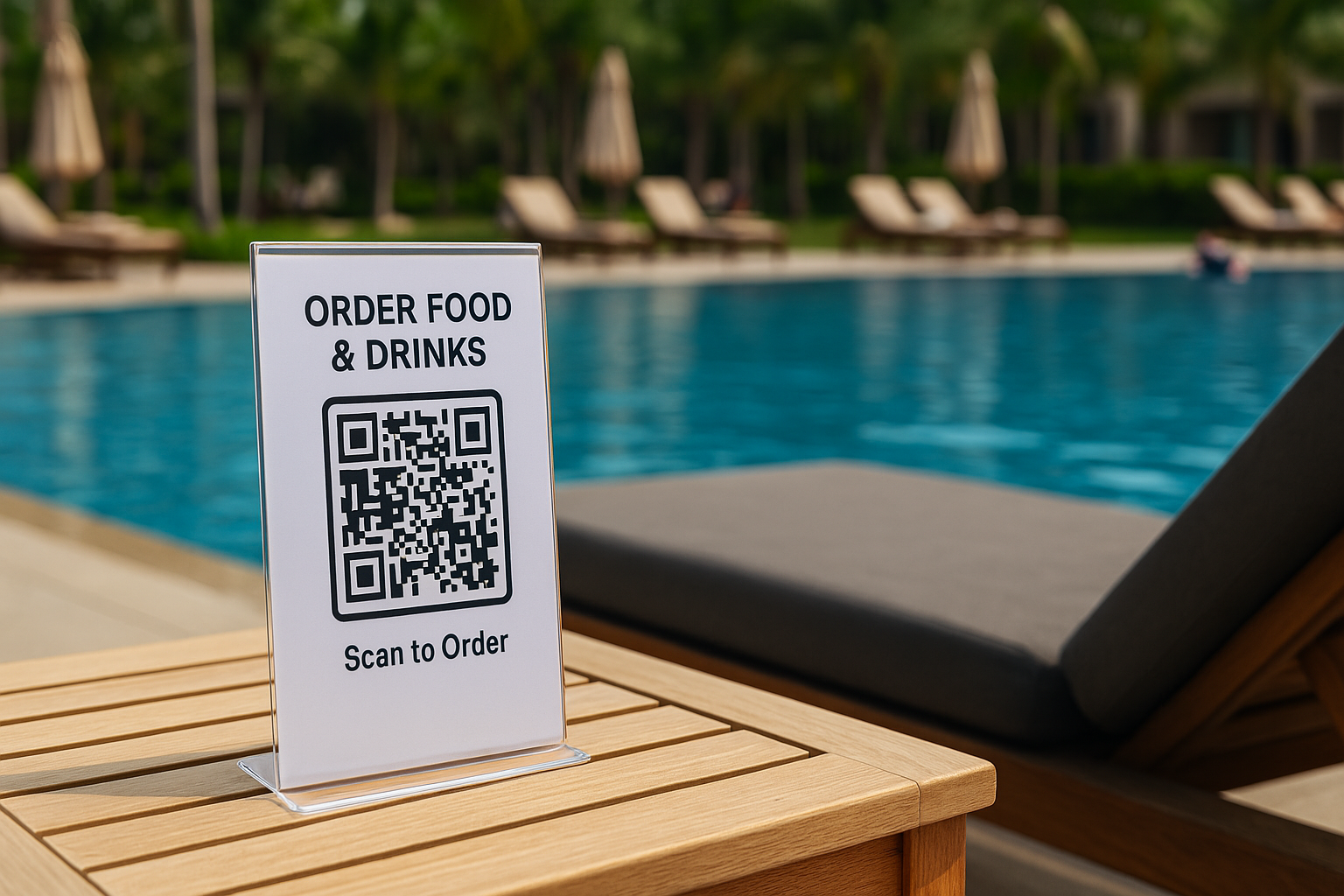
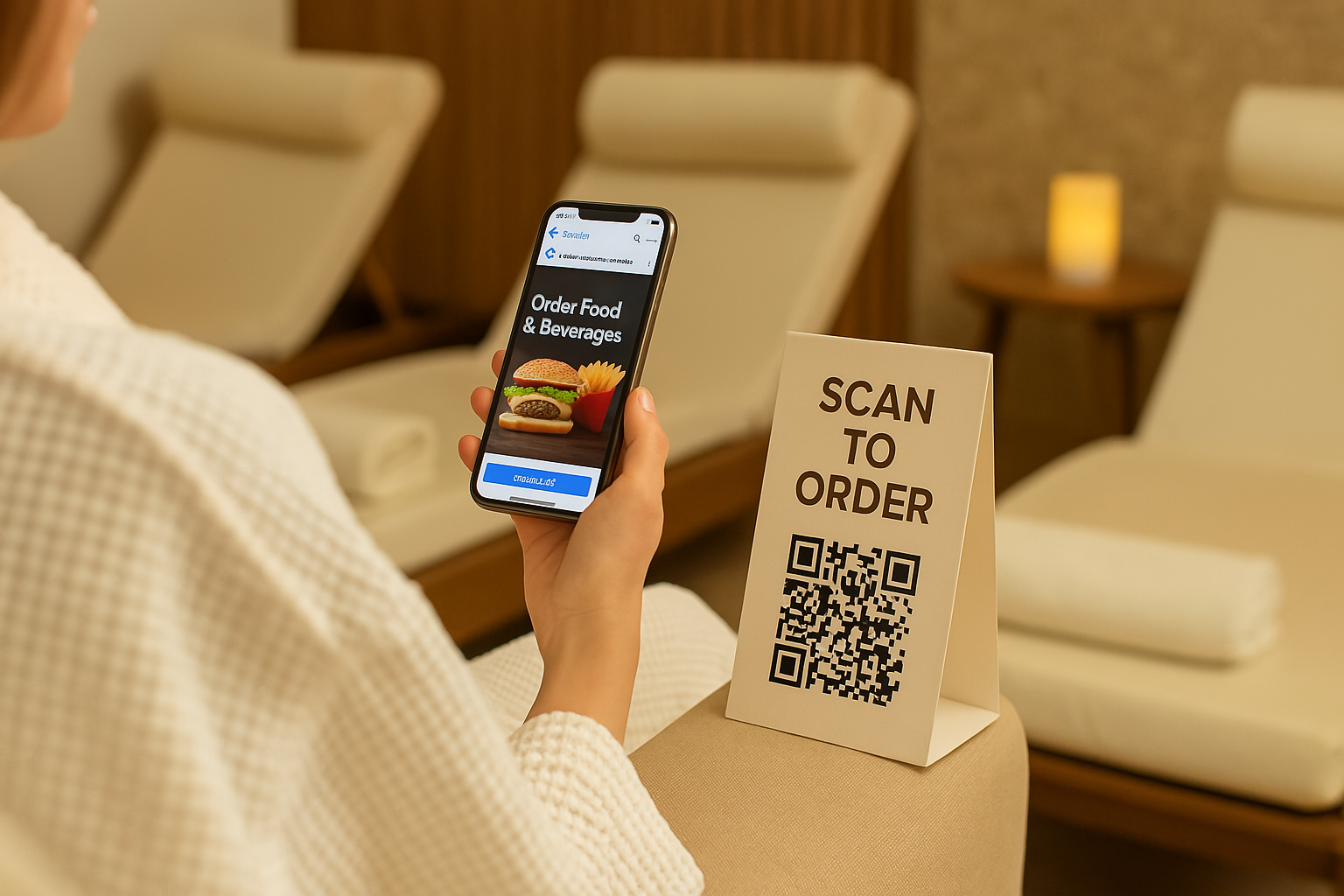
Let’s paint the picture: A guest is lying in the sun, reading a book. They look up. There’s a QR code on their chair’s armrest that says: “Order Cocktails + Snacks Right to Your Seat”. They scan it.
Boom—the system knows they’re in Pool Area A, Chair 24. The menu that appears is curated to poolside items only. It’s clear. It’s visual. Pricing is all-inclusive (more on this later on…).
They scroll. Tap a frozen drink. Add a side of chips and guac (thanks to a smart upsell prompt). Choose Apple Pay. Confirm the order.
All of that? Under 45 seconds.
They never had to talk to anyone. Never had to type in a room number. Never had to “wait for someone to come around.”
That’s the experience.
Now compare that to how the order process is currently being done at your property. I think it’s pretty safe to say that the way your property is currently doing this (if you’re currently even doing it at all) is being done this efficiently.
And one more thing… Don’t just implement mobile ordering and call it a day.
Train your team to support it. Mobile ordering doesn’t replace hospitality. It repositions it. Now your servers and attendants aren’t chasing down orders or running credit cards. They’re smiling. Checking in. Delivering the goods. Making eye contact. Building relationships.
That’s the win. You’re freeing up your people to actually deliver hospitality — while the system handles the transaction.
If You’re Not Upselling, You’re Not Even Trying
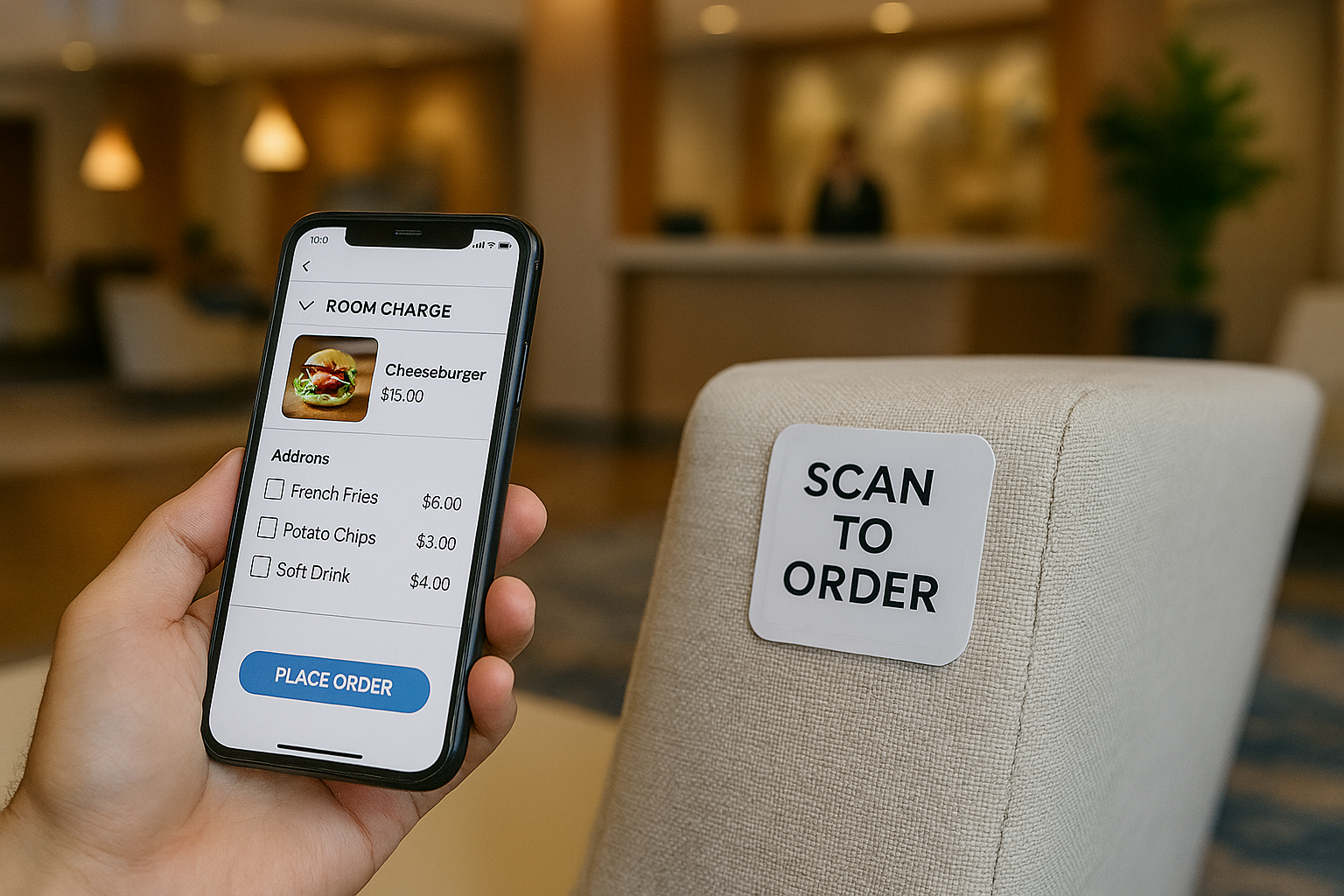
Let’s be blunt… If your guest adds a burger to their cart and your system doesn’t suggest fries… your POS isn’t just underperforming — it’s actively costing you revenue.
- If it doesn’t prompt them to have their drink delivered in a collectors cup…
- If it doesn’t suggest adding a side salad to that sandwich…
- If it doesn’t recommend upgrading their house liquor to a premium brand…
That’s not a missed opportunity. That’s a broken strategy.
Because your guest is already in yes mode. They’re hungry. They’re thirsty. They’re spending. The hard part is done! Now you just need to guide them to the next logical “yes.”
And you can’t leave that to chance — or to your server remembering to ask if they want fries with that. That’s where AI comes in.
What AI Upselling Looks Like in Practice
Let’s say a guest orders tacos from the poolside menu.
Your system instantly recommends:
- Chips and guac
- A frozen margarita
- A side of elote
- And maybe, just maybe… some churros to finish it off
It doesn’t feel like a sales pitch. It feels like a smart suggestion—because it is. It’s contextual. It’s relevant. It’s frictionless.
And over time? It gets smarter. Your system starts learning what people tend to order together. What time of day certain items convert. What combos increase check average.
It doesn’t sleep. It doesn’t forget. It doesn’t get tired or shy or distracted. It just works.
Let’s be clear… This is not “AI for AI’s sake.” This is automated revenue per order growth — and it’s scalable, repeatable and constantly improving.
You’ve already spent the labor, prepped the food and captured the order. Now it’s time to raise the check average — with zero extra cost.
Dynamic Pricing: Stop Pricing Like It’s Tuesday All Week Long
Look, we get it — most hotel restaurants and bars operate with fixed pricing because… that’s how it’s always been done.
But here’s the problem: your guest demand doesn’t operate in a straight line.
There are:
- Mid-afternoon lulls
- Rainy days when the pool bar dies
- Mondays where in-room dining flatlines
- Conference breaks that suddenly flood the lobby
- Gorgeous sunsets that pull every rooftop seat into action
Your operation is dynamic — but your pricing is stuck in neutral. And that’s a massive missed opportunity! If your F&B program isn’t using real-time, dynamic pricing to influence guest behavior, you’re playing defense while your competitors (and third-party delivery apps) play offense.
Here’s the Simple Truth: Time + Context = Opportunity
Let’s break it down. If it’s 3:30PM and nobody is ordering anything, you have two options: 1) Wait and hope someone gets hungry OR 2) Trigger a flash promo: “Frozen cocktails $5 for the next hour. Order now from your phone.”
One keeps you flat. The other creates action.
Dynamic pricing isn’t about discounting for the sake of it. It’s about controlling demand and guiding guests toward a behavior now, instead of maybe later.
It works in retail. It works in rideshare. It works in sports and entertainment. And yes—it works in hospitality, too.
This isn’t just about driving volume during slow periods. This is about controlling the flow of revenue throughout the day with intention. You’re no longer just hoping someone orders. You’re engineering desire in real time, based on conditions on the ground.
Hotels that get this right don’t just sell food. They create momentum.
Geofence Marketing: Turn Scrolls into Sales Without Saying a Word
Let’s set the scene… Your guest is poolside. Sun on their face. Book in hand. Or maybe scrolling Instagram, flipping through reels. They’re not thinking about ordering food or drinks yet. Not consciously.
But that’s the moment. That’s when a well-timed, location-specific ad hits their feed:
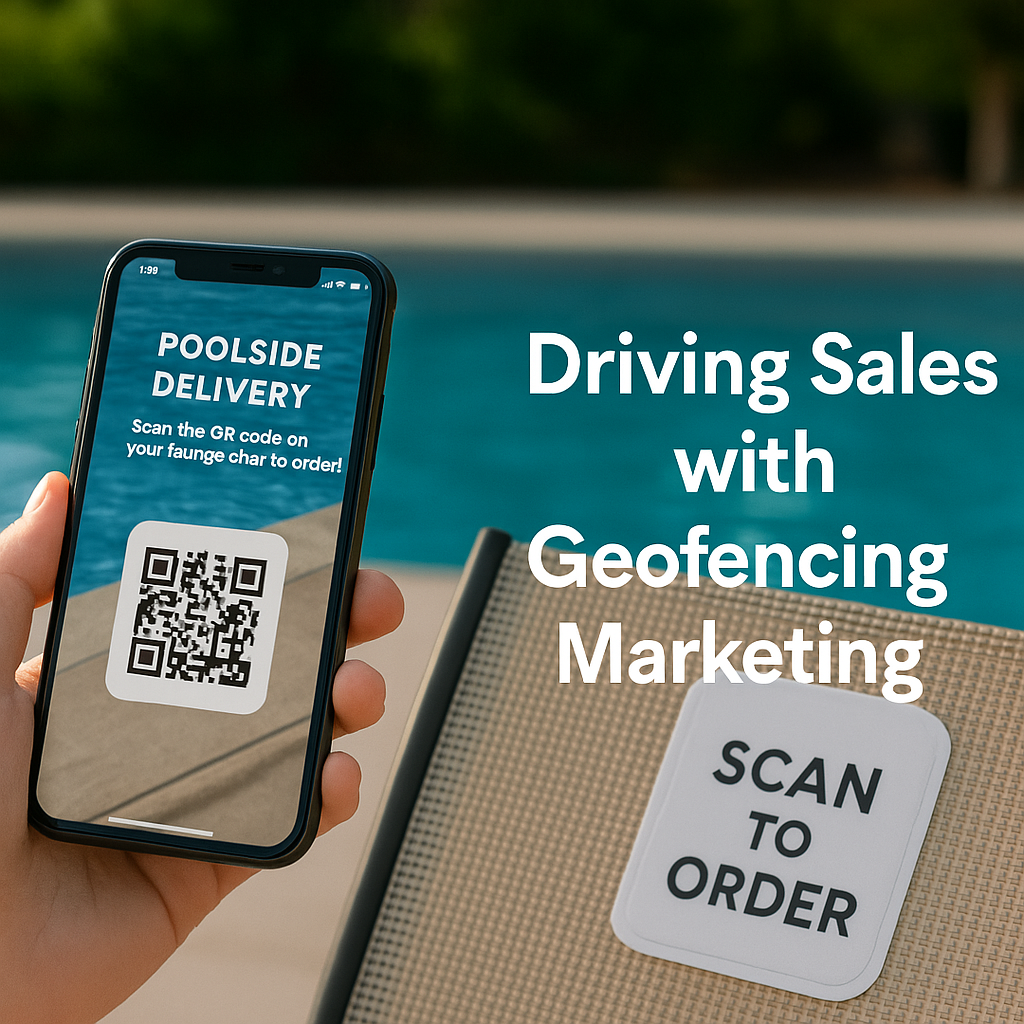
“Welcome to the Pool! Frozen cocktails + snacks delivered right to your chair. Scan the QR code on your lounge chair or day bed and we’ll handle the rest.”
No friction. No decision fatigue. No delay. The guest scans the QR code on their lounge chair, tthe menu loads—localized, curated and ready. Two minutes later, their order’s in motion.
And they never had to talk to anyone. That’s Geofence Marketing Done Right.
This isn’t “boosted posts.” This isn’t spray-and-pray ad spend. This is location-triggered digital demand generation — and it’s wildly underutilized in hotels. Your guests are already scrolling. Already browsing. Already reachable. And your property is already geolocated in every mobile app they use. So why aren’t you using it?
Here’s What You’re Missing Without It:
- The guests walking into your lobby who never realize there’s a specialty coffee bar just around the corner.
- The business traveler sitting in their room between meetings who doesn’t know they can get a snack delivered in under 15 minutes.
- The guest who checks in and instantly opens Instagram—not to post, but to relax—and never sees your rooftop happy hour.
That’s demand. But you’re invisible.
Geofencing flips the equation. Now, when your guest enters a pre-mapped location such as your pool, your lobby, your rooftop lounge, even your spa, they get a nudge by seeing a targeted sponsored post or getting a text alert!
Not annoying. Not spammy. Just perfectly timed:
“Just checked in? Start your stay with a complimentary glass of bubbles. Order from your phone with a single tap.”
“Lobby vibes calling? Order a snack + sip from your seat. No lines, no waiting.”
You’re not interrupting them. You’re activating them. Remember, geofence marketing isn’t about being flashy. It’s about being present.It’s about meeting your guest before they raise their hand — so when the moment hits, you’re already there.
Inclusive Pricing: No More “Gotcha” Fees. Build Trust, Drive Sales and Stop Pissing Off Your Guests.
Let’s just say what everyone’s thinking: Nobody’s mad about a $17 cocktail. They’re mad when it’s $13 on the menu… and $17 at checkout.
It’s the same bait-and-switch that’s plagued the restaurant industry, airline industry and especially Ticketmaster.
Ticketmaster: The Poster Child for Consumer Rage
Remember buying a $45 concert ticket… only to have it jump to $72.83 when you hit checkout?
- $9.25 “service fee”
- $4.95 “order processing fee”
- $6.50 “facility charge”
- And that $2.13 “you blinked” surcharge? Yeah, that one too.
People were furious — and rightfully so. So much so, in fact, that Ticketmaster was forced to pivot. They’ve now rolled out “All-In Pricing” across the U.S.—one clear number up front, no surprises—because consumer trust was cratering. They still add tax at checkout (as required), but everything else? Built into the price. No more hidden garbage fees. If the most fee-happy brand on the planet had to change to survive, what makes you think your hotel pool bar is immune?
Back to You… Why are you SABOTAGING SALES by having all of these junk fees?
$15 turkey club
- +$3.00 “tray charge”
- +$2.25 “hospitality fee”
- +$1.50 “delivery surcharge”
- +20% auto-gratuity
- +tax
Now your guest is staring at a $24.89 turkey club and wondering whether they should’ve just called Uber Eats.
Not because your food isn’t worth it… But because your checkout feels like a scam.
Guests Aren’t Mad About Price.
They’re Mad About the Add-on Fees!
You don’t build trust with a guest by offering great food and great service, only to then immediately break it with shady math. Guests want to know what they’re paying before they hit the pay button. If you’re not upfront about cost, your guest assumes you’re not upfront about other things either. That trust crack doesn’t stay isolated — it spreads.
Inclusive Pricing = Confidence = Conversion
When you build your costs — delivery, service, packaging, tech — into your menu pricing:
- You eliminate friction
- You increase order volume
- You reduce drop-offs
- You stop training guests to resent you at checkout
$17 all-in? They’ll tap that button all day. $13 that turns into $18.43? Hard pass.
Want to be seen as a premium experience? Then stop acting like a discount airline trying to upsell a carry-on bag. Luxury isn’t about price — it’s about experience. And the most important part of that experience is TRUST. In 2025 (and beyond), TRUST is the ULTIMATE form of currency!
Let’s lock it in. This is where everything comes together—The Guest Journey Funnel. This is the system. The blueprint. The playbook that turns every lounge chair, bar stool, guest room and lobby seat into a real-time revenue-generating opportunity. It’s not theory—it’s how you build a seamless, scalable, unstoppable food and beverage ecosystem.
The Guest Journey Funnel: From “I Might” to “I Just Did”
Most hotels treat food and beverage like it exists in a bubble — separate menus, separate teams, separate systems. The guest experience? Fragmented.
Meanwhile, your guests are moving fluidly through the property all day and making decisions in micro-moments. You don’t need more menus or more signs… you need a funnel! You need one continuous, intuitive, smart system that meets your guest wherever they are and guides them, effortlessly, to action.
Here’s how that system looks in the real world—from first point of awareness to final check-in.
Stage 1: Awareness (Geofence-Triggered Nudges)
Your guest steps into a location — let’s say the pool. Their phone recognizes they’re in the pool area. Your geofence campaign triggers a beautifully written, perfectly timed ad.
“Hey there, hope you’re enjoying the vibes poolside! Ready for a cocktail delivered to your chair?” They tap. Now they’re curious. Open. Receptive.
That’s awareness created by environment + marketing. Not a billboard. Not a flyer. Just presence.
Stage 2: Location-Linked Action (Scan + Recognize)
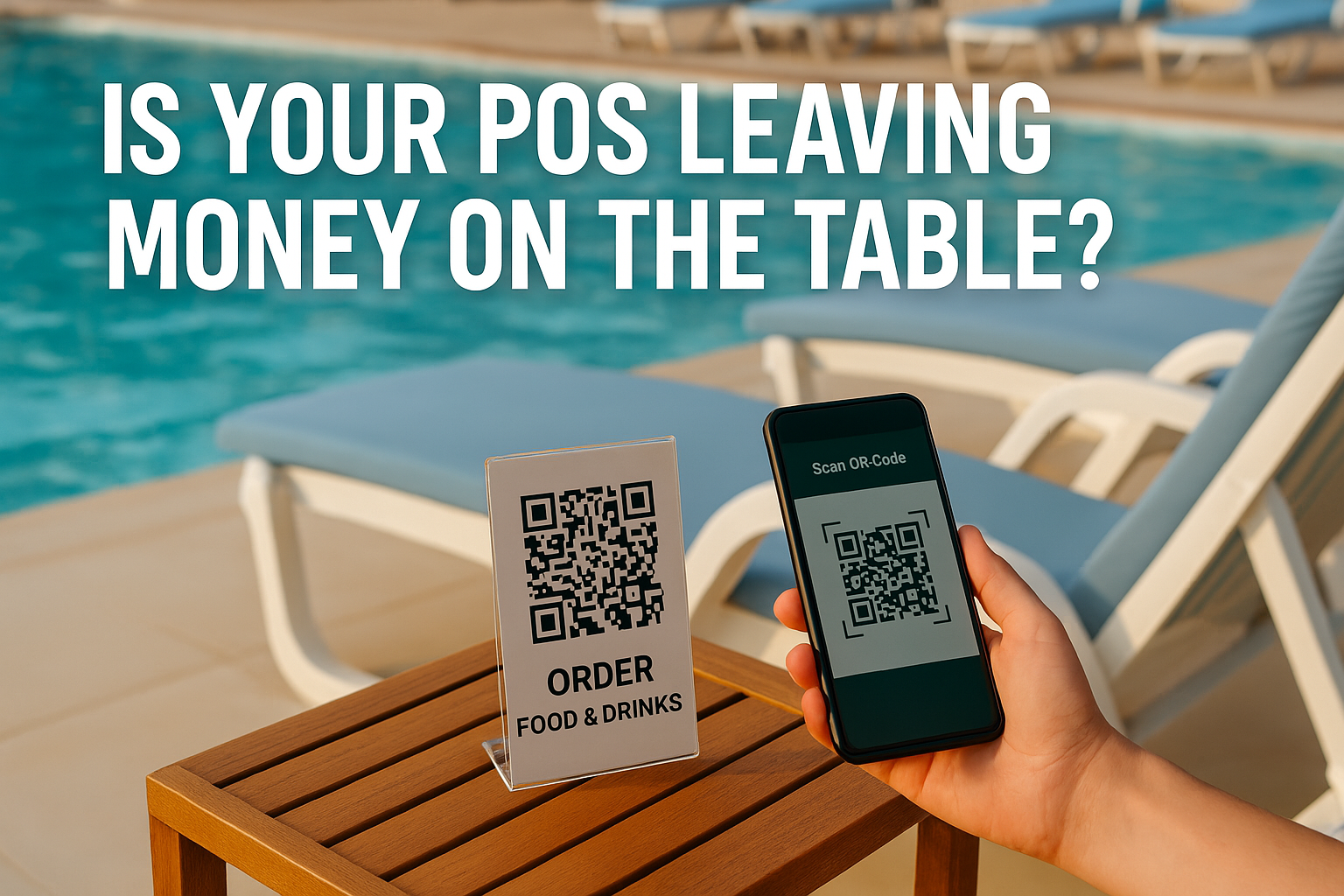
They follow the CTA (call to action). The screen tells them: “Simply scan the QR code on the arm of your chair to start your order.” They scan it. That QR code isn’t generic. It’s tied directly to their seat. The system knows: Pool Deck A, Chair 24.
Instantly, they’re dropped into a menu that’s:
- Location-specific
- Time-specific
- Context-aware
- And most importantly: simple! No dropdowns. No typing. No guesswork.
Stage 3: Curated Ordering (Smart Menus, Instant Flow)
They scroll. The menu shows:
- Only items available for poolside delivery
- Inclusive pricing (no surprise fees)
- Clean photos, descriptions and estimated delivery time
They tap on a margarita. Add it to cart. The system suggests:
- Chips and salsa
- A second drink at 20% off
- A fruit salad featuring fresh strawberries from a local farm
They grab a snack, add the second drink. Checkout takes 10 seconds—Apple Pay. Boom. Order in motion.
You just increased check average without a single team member touching the process.
Stage 4: Delivery + Experience (Runners, Not Servers)
The order routes to your team. There’s no confusion. Your runner sees the order, the seat, the delivery time. They grab it and go. No one had to track down the guest. No one took an order by hand. The food is hot. The drinks are cold. The timing is tight.
The experience feels luxurious — even though the system did 90% of the work.
Stage 5: Follow-Up That Feels Personal
Ten minutes after delivery, the system sends a short, friendly text message:
“Hey Rachel, this is Taylor from the F&B team — just checking in. Was your chips & guac and margarita everything you hoped it’d be (and then some)? How about those awesome locally grown strawberries in the fruit salad? Was everything in your order outstanding?”
If Rachel replies with anything less than “amazing,” the system flags the manager on duty. They can respond directly and in-person to offer recovery.
Or if Rachel says it was “perfect”, the system can automatically come back with
“Love to hear it! Just wanted to let you know, tonight from 5pm-7pm on the pool deck, we’ve got 2-for-1 tacos rolling in! They’re a crowd favorite for sure! Please feel free to text this number if there is anything else we can do to help make your visit even more magical!”
Follow-up becomes loyalty.
Loyalty becomes frequency.
Frequency becomes revenue.
Stage 6: Retargeting + Repetition
Now that she’s ordered once, Rachel gets a subtle push the next time she walks into the rooftop lounge or orders room service. She’s already familiar with the flow. Already comfortable with the interface. Already primed for conversion.
Now you’re not hoping she orders. You’ve created a system that anticipates, invites, delivers and repeats.
This Is the Funnel. This Is the Future.
Let’s be real: this isn’t optional anymore. If your hotel isn’t building this kind of guest journey — mobile-first, location-aware, AI-enhanced and human-supported — you’re not just behind. You’re invisible! And meanwhile, your competition is:
- Spending less on labor
- Making more per transaction
- Delivering faster, cleaner, more personalized service
- And converting idle moments into instant sales—at scale
Final Wake-Up Call: You Don’t Have a Guest Problem. You Have a System Problem.
By now, you’ve got the full picture. You’re not struggling with food quality. Or branding. Or even competition. You’re struggling with friction.
You’ve got guests who are literally on your property, phone in hand, credit card ready, stomach rumbling… and they’re still ordering from somewhere else. Not because they want to. Because your property’s outdated systems made it easier for them to spend money with someone else.
Read that again.
That’s the real problem. And it’s fixable. But not if you keep doing what you’ve been doing.
This Isn’t About Tech. It’s About Alignment.
You don’t need a new POS “because it’s cooler.” You need it because your current one is killing conversions.
You don’t need geofence marketing “because it’s trendy.” You need it because your guests are already on their phones — you’re just not showing up when it matters.
You don’t need mobile ordering “because other brands have it.” You need it because that’s how people live now! Your guests aren’t lowering their standards just because they’re in a hotel… in fact, there is a good chance that they’re actually elevating their standards and expectations!
This is about meeting modern expectations with modern execution. And that’s leadership’s job. Not the tech vendor. Not your floor supervisor. Yours.
Here’s What to Do Next: Your Action Plan
No fluff. No jargon. Just steps:
Step 1:
Audit your current guest ordering flow in every outlet. Sit in the chair. Scan the code. Try to order. Pay. Take notes on what sucks. Be honest… do you even have a QR code system in place? Did you get a text message or targeted Instagram ad to lure you into placing an order you didn’t even know you wanted?
Step 2:
Meet with your POS or ordering partner and ask them a few questions:
- Can our system handle mobile ordering by seat/room?
- Can it integrate with the PMS for room charge?
- Does it have a loyalty / frequent guest program built-in?
- Can we set up automated upsells, dynamic pricing, and guest-specific follow-ups?
If they say yes, find out the details to start implementing these changes and then move on to Step 3 below.
If they say no, you have your answer: It’s time to switch. You can’t move on to the next steps until your technology allows you to!
Step 3:
Talk with several marketing experts about geofencing core areas in 1 area. Launch your first test campaigns with hyper-specific messaging. Start simple
Step 4:
Build your first dynamic pricing plan. Identify slow periods. Launch time-based promos. Use countdowns, limited-time language, and exclusive offers.
Step 5:
Create your follow-up messaging flows.
Script 3 versions:
- Perfect experience
- Minor issue
- Major problem
Test your system’s ability to flag replies and alert managers.
Step 6:
Roll it out in one space. Just one. The pool. Or the rooftop. Or the lobby bar.
Test the funnel. Measure conversion. Watch the numbers. Then scale.
You Built the Kitchen. You Built the Bar. You Built the Brand.
Now… Build the system that actually sells it. Because the future of hotel food and beverage isn’t about bigger teams, fancier concepts or gimmicky experiences. It’s about removing resistance. Increasing momentum. And meeting your guest exactly where they are—in the moment they’re ready to buy.
That’s how you stop blocking the sale. That’s how you reclaim revenue. That’s how you build F&B that performs.
And it starts right now.